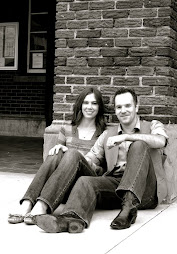
Brice, Ethan and I had the opportunity to do a recording for a radio "spot" promoting Children's Mercy Hospital. Beginning today, you can hear it on the following radio stations: KBEQ 104.3, KPRS 103.3, KUDL 98.1, Mix 93.3, Jack 105.1 and Star 102. It is my understanding that it will run for several weeks. We felt honored to be able to help promote an incredible children's hospital that God has used so much in Ethan's life. It was fun to do!
For those of you outside KC, you can listen online. Here is a website of KC radio stations and then you can select a specific radio station and be directed to that site.
http://kansascity.about.com/od/communityinformation/a/RadioStations.htm
Cards, cards and more cards!
For about the past two weeks, we have received at least one card a day (some days two, three and even four!) from someone who is praying for our family. Thank you so much to all who have sent cards and emails. They are so encouraging and we are blown away by the support and encouragement.
Surgery is RESCHEDULED!
Ethan's surgery has been moved back a couple of weeks to Tuesday, April 24th. Why? Because there are currently a high number of kids in the hospital (some in the PICU) who have RSV and the surgeon doesn't want to risk exposing Ethan. We thought that April 5th was a "safe" enough date, but Dr. O'Brien prefers that it be later in the month. We were frustrated at first, but how can we argue with the fact that the surgeon has Ethan's best interests in mind?
It is a reality check, though. Ethan's surgery date could still get bumped if a case comes up that is an emergency. Fortunately, Ethan can safely wait a couple more weeks for surgery.
We will be able to spend Easter at home now!
It is a reality check, though. Ethan's surgery date could still get bumped if a case comes up that is an emergency. Fortunately, Ethan can safely wait a couple more weeks for surgery.
We will be able to spend Easter at home now!
Website Link
Check out the web link I posted to the right under "helpful links". It gives an explanation of Ethan's heart defect and also shows a great diagram of a normal heart vs. Ethan's heart. Ethan also has three other defects to the left side of his heart, but Coarctation of the Aorta is the most severe defect and the reason he will be having surgery.
Mix 93.3 Radiothon
Just wanted to ask all those in Kansas City to tune into Mix 93.3 today and tomorrow. They are live at Children's Mercy Hospital talking to families who have had experiences with CMH. Have your box of tissue handy! We are so fortunate to live close to such a great children's hospital with wonderful doctors and nurses. God used them to save Ethan's life!
You can also listen online at http://www.mix93.com/default.asp. Click "listen online" to the left of the page.
You can also listen online at http://www.mix93.com/default.asp. Click "listen online" to the left of the page.
Surgery is Scheduled!
If someone had told me while I was growing up that I would give birth to a little boy who would go through two heart surgeries by the time he was a year and a half, I don't think that I would have wanted to have kids. I am so glad that I did not know back then what the future would be because I would have made the wrong decision. And I am so glad that we have a faithful God and wonderful family and friends to carry us through.
Ethan will have his second heart surgery on Thursday, April 5th. It is a relief to have it scheduled and we are ready to have it behind us. No more "putting it off". Sometimes I get asked if we have ever checked into getting a second opinion. Well, we get about 10 opinions on Ethan every time his case is reviewed and the overwhelming consensus is that he needs this surgery now.
This surgery will not have to be open heart. It will be a "closed heart" surgery, where the surgeon will make the repair through a side incision (thoracotomy). Dr. O'Brien will clamp Ethan's aortic artery, cut out the narrow segment of his aortic artery and sew the wider ends back together. Sounds pretty straightforward, doesn't it?!? That is why he makes the big bucks (and deserves every penny, in my opinion!)
The good news about this type of heart surgery is that Ethan will not have to be on bypass (heart/lung machine), like he was the first time. This always adds increased risk. No one can tell us how long Ethan will be in the hospital after surgery - it will depend on how he does. But, we are planning on spending Easter in the hospital! I'll just have to pack Ethan's Easter basket along with all our other stuff.
Ethan's cardiologist is not going to treat Ethan's blood pressure increase right now - he really isn't too concerned about it. Ethan's BP is high in his upper extremities and normal in his lower extremities and putting him on BP meds would lower his blood pressure too much in his lower extremities. Surgery should hopefully correct his BP in his upper body, but time will tell on this.
The day before surgery, we will take Ethan in for all the "fun" pre-op tests. We will also meet with the anesthesiologist and the surgeon at that time. He will be in the PICU after surgery. Recovery will be rough. Ethan will be in lots of pain - it will hurt for him to breath and it will hurt for him to move, let alone be held. I can't even think about that - way too difficult.
It is important that Ethan stay healthy for the surgery so that we don't have to reschedule. Fortunately, we are headed into a healthier season soon.
We are so grateful for your faithfulness to pray for Ethan and our family.
Ethan will have his second heart surgery on Thursday, April 5th. It is a relief to have it scheduled and we are ready to have it behind us. No more "putting it off". Sometimes I get asked if we have ever checked into getting a second opinion. Well, we get about 10 opinions on Ethan every time his case is reviewed and the overwhelming consensus is that he needs this surgery now.
This surgery will not have to be open heart. It will be a "closed heart" surgery, where the surgeon will make the repair through a side incision (thoracotomy). Dr. O'Brien will clamp Ethan's aortic artery, cut out the narrow segment of his aortic artery and sew the wider ends back together. Sounds pretty straightforward, doesn't it?!? That is why he makes the big bucks (and deserves every penny, in my opinion!)
The good news about this type of heart surgery is that Ethan will not have to be on bypass (heart/lung machine), like he was the first time. This always adds increased risk. No one can tell us how long Ethan will be in the hospital after surgery - it will depend on how he does. But, we are planning on spending Easter in the hospital! I'll just have to pack Ethan's Easter basket along with all our other stuff.
Ethan's cardiologist is not going to treat Ethan's blood pressure increase right now - he really isn't too concerned about it. Ethan's BP is high in his upper extremities and normal in his lower extremities and putting him on BP meds would lower his blood pressure too much in his lower extremities. Surgery should hopefully correct his BP in his upper body, but time will tell on this.
The day before surgery, we will take Ethan in for all the "fun" pre-op tests. We will also meet with the anesthesiologist and the surgeon at that time. He will be in the PICU after surgery. Recovery will be rough. Ethan will be in lots of pain - it will hurt for him to breath and it will hurt for him to move, let alone be held. I can't even think about that - way too difficult.
It is important that Ethan stay healthy for the surgery so that we don't have to reschedule. Fortunately, we are headed into a healthier season soon.
We are so grateful for your faithfulness to pray for Ethan and our family.
Another Surgery
Just wanted to let everyone know that Ethan's surgeon and cardiologist (and the team of cardiologists at CMH) have decided that Ethan should have another surgery. The "coarctation" (narrowing) in his aortic artery needs to be repaired again and they don't see any reason to put it off any longer. (We have been putting it off since last July).
I will hopefully talk to the surgeon's office next week to set a date. So...we wait some more.
Would appreciate your prayers for all the details to come together and also for our family as there are so many emotions involved in going through surgery again.
God has a plan somewhere in all of this. It is just so difficult when you can't see that plan right away. But we trust God to continue to protect Ethan.
I will hopefully talk to the surgeon's office next week to set a date. So...we wait some more.
Would appreciate your prayers for all the details to come together and also for our family as there are so many emotions involved in going through surgery again.
God has a plan somewhere in all of this. It is just so difficult when you can't see that plan right away. But we trust God to continue to protect Ethan.
Article about Pediatric Cardiovascular Surgeon
This in an interesting article. It was posted on an internal message board at Children's Mercy and forwarded to me from a nurse who works there. Children's Mercy has two Pediatric Cardiovascular Surgeons - Dr. Lofland and Dr. O'Brien.
What It’s LikeOperating on a Heart no Bigger Than a Strawberry
Gary Lofland‚ MD‚ Section Chief of Cardiovascular SurgeryThe Joseph Boon Gregg/Missouri Endowed Chair in Pediatric Cardiac Surgery
Pediatric cardiac surgery is completely different than any other kind of surgery. We are operating on tiny hearts that are going to continue to have to grow‚ so always in the in the back of your mind you are factoring in the ability of this heart – that you are going to rearrange – to grow.
Sometimes it is like you have been given a heart kit and are expected to rearrange it and have it work. Unlike some other forms of surgery where you allow things to heal‚ what you do in the operation has to work the first time. It has to work.
Night Before SurgeryAlways the night before‚ I go through all the surgery I’ll be doing the next day and some I go through step by step. For some patients you not only have to have plan A‚ but a fall-back plan in case you encounter the unexpected or plan A starts to go awry because of previous surgeries‚ adhesions‚ things like that.
We try to do two surgeries every day‚ sometimes three. You have to plan out and risk stratify them. We try to do some of the more straight forward ones early on and follow up with the ones that are going to demand more time and thought. But you do that by thinking through them ahead of time.
I get plenty of sleep the night before‚ but there are some operations performed upon kids that one absolutely dreads because you know it is going to be a very‚ very risky outcome with a fine balance between success and failure. Those you wake up at night thinking about.
So‚ there is sort of that kind of pressure. Some of the things I used to really fret and stew about I’ve done so many times that I look at those as sort of relaxing operations. There are so many more complicated things out there to be done.
Day of SurgeryPrior to surgery‚ I don’t talk. I like to get into “the zone.” If I don’t engage in idle chit chat‚ it is not out of rudeness‚ it is out of discipline.From the time the patient arrives in the Operating Room‚ I stay in the OR. There is a lot of preparation going on with the patient‚ so until I make the skin incision‚ I just pace and wait. I just can’t wait to get started.
I really don’t feel any pressure during surgery‚ unless I encounter something that is completely unexpected. I like to operate quickly and detest inefficiency‚ lack of focus and wasting time. I have always felt that I work better under pressure‚ thinking clearly and quickly.
During SurgeryWhen you are doing this kind of surgery‚ you are operating under significant time constraints. Once you stop the heart or circulation‚ everything is basically dying. You are working against the clock‚ so when you encounter something unexpected‚ you have to think immediately. How am I going to deal with this? How am I going to fix this? You have to process that information pretty quickly.
One of my mentors‚ Dwight C. McGoon‚ MD‚ from the Mayo Clinic‚ wrote about the responsibility of the heart surgeon dealing with the great complexity of the heart and congenital defects‚ stating‚ “He or she must feel the weight of having accepted from the parents that strongest of all possible human obligations - the profound‚ primordial‚ instinctive identification and responsibility for an offspring.”
When you are doing this‚ you are basically accepting responsibility for a life as yet unlived.
So how do you deal with it? Well‚ I haven’t thought too much consciously about it. You just do.
After SurgeryAfter the surgery‚ I go talk to the family. What I say has lots to do with how the operation went‚ how sick the patient was going into surgery‚ and how sick the patient is going to be after surgery. Even if it is a complicated operation that went extremely well and the patient is doing just fine‚ that talk can be brief because everything went so well.
It’s only when you encounter things that you didn’t know about or when you encounter anatomy that even though you’ve repaired it using everything you have‚ and you’ve done the best you can with the tissues you have‚ but the child is going to need something else down the road … that talk is a little longer.
You always try to be optimistic but you also have to be very objective. I don’t hide anything with parents. I tell them exactly what we encountered‚ what we had to do‚ how the results look now and what might be expected. I try to be reassuring and respectful.
When you are faced with complicated anatomy and the operation went great and the repair looks perfect and still doesn’t work … that’s the frustration. This is not a profession that makes you arrogant. It makes you humble.
But even though it is stressful‚ it can be highly satisfying. As Dr. McGoon wrote‚ “Surely no more depth of sincerity can be imagined than that expressed in the ‘thank you’ of a parent for a safe and successful surgical endeavor‚ nor more pain‚ frustration and despair if the outcome should be the opposite.”
Pondering the Past and the FutureWhen I look back at the end of each surgery‚ and at the end of my career‚ I hope all my patients and families know that I did the absolute best that I could with every patient upon whom I operated. I would also like to think that I did something to push back the limits of what we are able to do.
What It’s LikeOperating on a Heart no Bigger Than a Strawberry
Gary Lofland‚ MD‚ Section Chief of Cardiovascular SurgeryThe Joseph Boon Gregg/Missouri Endowed Chair in Pediatric Cardiac Surgery
Pediatric cardiac surgery is completely different than any other kind of surgery. We are operating on tiny hearts that are going to continue to have to grow‚ so always in the in the back of your mind you are factoring in the ability of this heart – that you are going to rearrange – to grow.
Sometimes it is like you have been given a heart kit and are expected to rearrange it and have it work. Unlike some other forms of surgery where you allow things to heal‚ what you do in the operation has to work the first time. It has to work.
Night Before SurgeryAlways the night before‚ I go through all the surgery I’ll be doing the next day and some I go through step by step. For some patients you not only have to have plan A‚ but a fall-back plan in case you encounter the unexpected or plan A starts to go awry because of previous surgeries‚ adhesions‚ things like that.
We try to do two surgeries every day‚ sometimes three. You have to plan out and risk stratify them. We try to do some of the more straight forward ones early on and follow up with the ones that are going to demand more time and thought. But you do that by thinking through them ahead of time.
I get plenty of sleep the night before‚ but there are some operations performed upon kids that one absolutely dreads because you know it is going to be a very‚ very risky outcome with a fine balance between success and failure. Those you wake up at night thinking about.
So‚ there is sort of that kind of pressure. Some of the things I used to really fret and stew about I’ve done so many times that I look at those as sort of relaxing operations. There are so many more complicated things out there to be done.
Day of SurgeryPrior to surgery‚ I don’t talk. I like to get into “the zone.” If I don’t engage in idle chit chat‚ it is not out of rudeness‚ it is out of discipline.From the time the patient arrives in the Operating Room‚ I stay in the OR. There is a lot of preparation going on with the patient‚ so until I make the skin incision‚ I just pace and wait. I just can’t wait to get started.
I really don’t feel any pressure during surgery‚ unless I encounter something that is completely unexpected. I like to operate quickly and detest inefficiency‚ lack of focus and wasting time. I have always felt that I work better under pressure‚ thinking clearly and quickly.
During SurgeryWhen you are doing this kind of surgery‚ you are operating under significant time constraints. Once you stop the heart or circulation‚ everything is basically dying. You are working against the clock‚ so when you encounter something unexpected‚ you have to think immediately. How am I going to deal with this? How am I going to fix this? You have to process that information pretty quickly.
One of my mentors‚ Dwight C. McGoon‚ MD‚ from the Mayo Clinic‚ wrote about the responsibility of the heart surgeon dealing with the great complexity of the heart and congenital defects‚ stating‚ “He or she must feel the weight of having accepted from the parents that strongest of all possible human obligations - the profound‚ primordial‚ instinctive identification and responsibility for an offspring.”
When you are doing this‚ you are basically accepting responsibility for a life as yet unlived.
So how do you deal with it? Well‚ I haven’t thought too much consciously about it. You just do.
After SurgeryAfter the surgery‚ I go talk to the family. What I say has lots to do with how the operation went‚ how sick the patient was going into surgery‚ and how sick the patient is going to be after surgery. Even if it is a complicated operation that went extremely well and the patient is doing just fine‚ that talk can be brief because everything went so well.
It’s only when you encounter things that you didn’t know about or when you encounter anatomy that even though you’ve repaired it using everything you have‚ and you’ve done the best you can with the tissues you have‚ but the child is going to need something else down the road … that talk is a little longer.
You always try to be optimistic but you also have to be very objective. I don’t hide anything with parents. I tell them exactly what we encountered‚ what we had to do‚ how the results look now and what might be expected. I try to be reassuring and respectful.
When you are faced with complicated anatomy and the operation went great and the repair looks perfect and still doesn’t work … that’s the frustration. This is not a profession that makes you arrogant. It makes you humble.
But even though it is stressful‚ it can be highly satisfying. As Dr. McGoon wrote‚ “Surely no more depth of sincerity can be imagined than that expressed in the ‘thank you’ of a parent for a safe and successful surgical endeavor‚ nor more pain‚ frustration and despair if the outcome should be the opposite.”
Pondering the Past and the FutureWhen I look back at the end of each surgery‚ and at the end of my career‚ I hope all my patients and families know that I did the absolute best that I could with every patient upon whom I operated. I would also like to think that I did something to push back the limits of what we are able to do.
Subscribe to:
Posts (Atom)